
How far can
a conversation go?
Seven experiments we actually built. A map that draws itself while a group talks. A 3D room born from an interview. A kiosk that listens to passers-by. Some you can open now, others we show live.
- The map that draws itselfA group talks, the process appears
- Eleven versionsOne process, eleven accounts
- The real org chartWho actually works with whom
- The drawing roomA room made of your answers
- A voice in the squareA kiosk that listens to passers-by
- Giulia and MarcoThe newsletter that talks back
- What if PeterChoose before you know
You talk.
The map draws itself.
Five people around a table and a single microphone in the middle. Carlo asks about the process. Every thirty seconds a second agent listens, recognises who is speaking and adds the steps just described to the map.
- Voices are told apart on their own, even when people talk over each other.
- Lanes, handoffs, waits and bottlenecks appear as people mention them.
- The group corrects the map in the room, before it becomes a document.
Prototype. We show it live.
Ask for a demo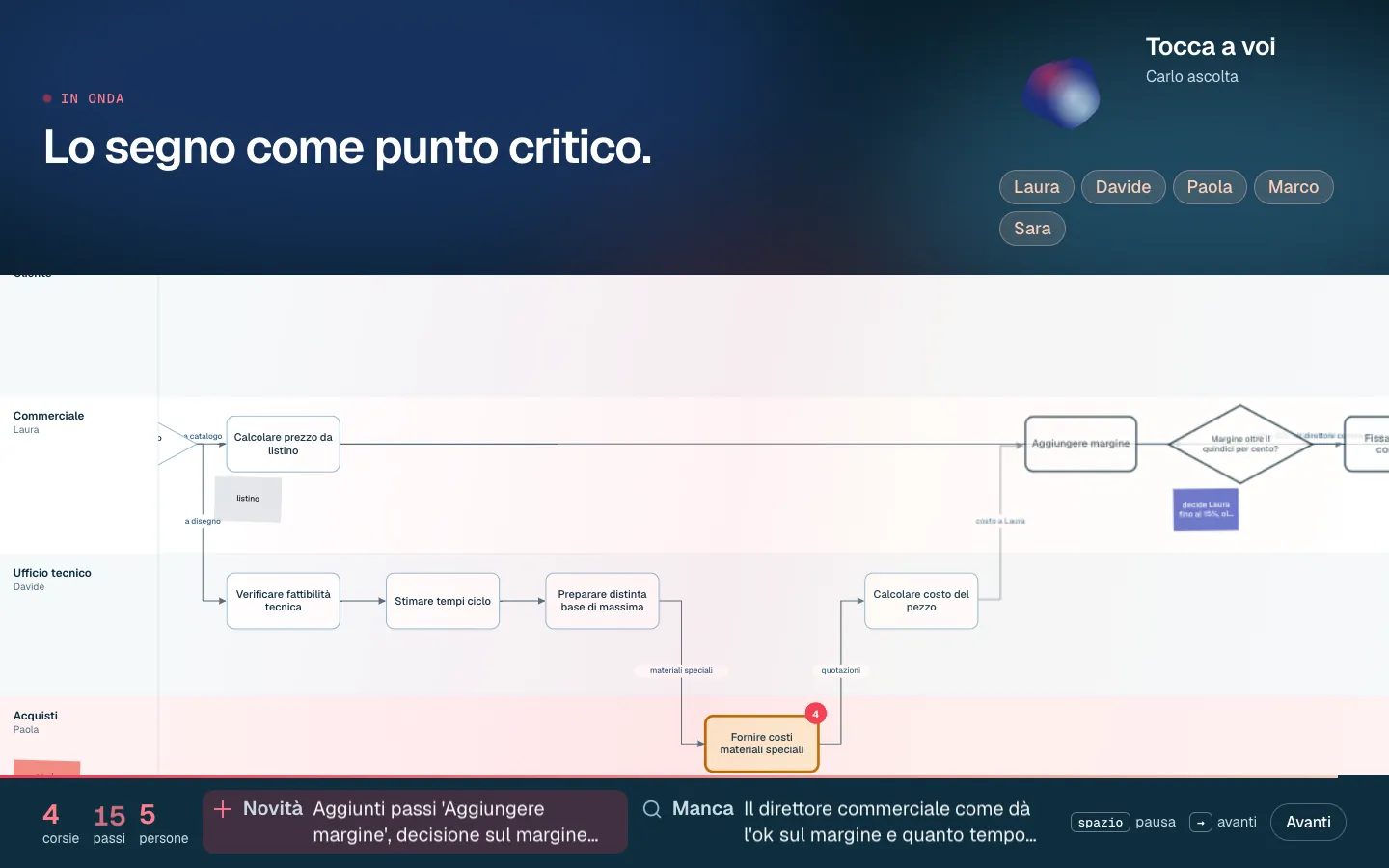
Eleven people.
Eleven versions.
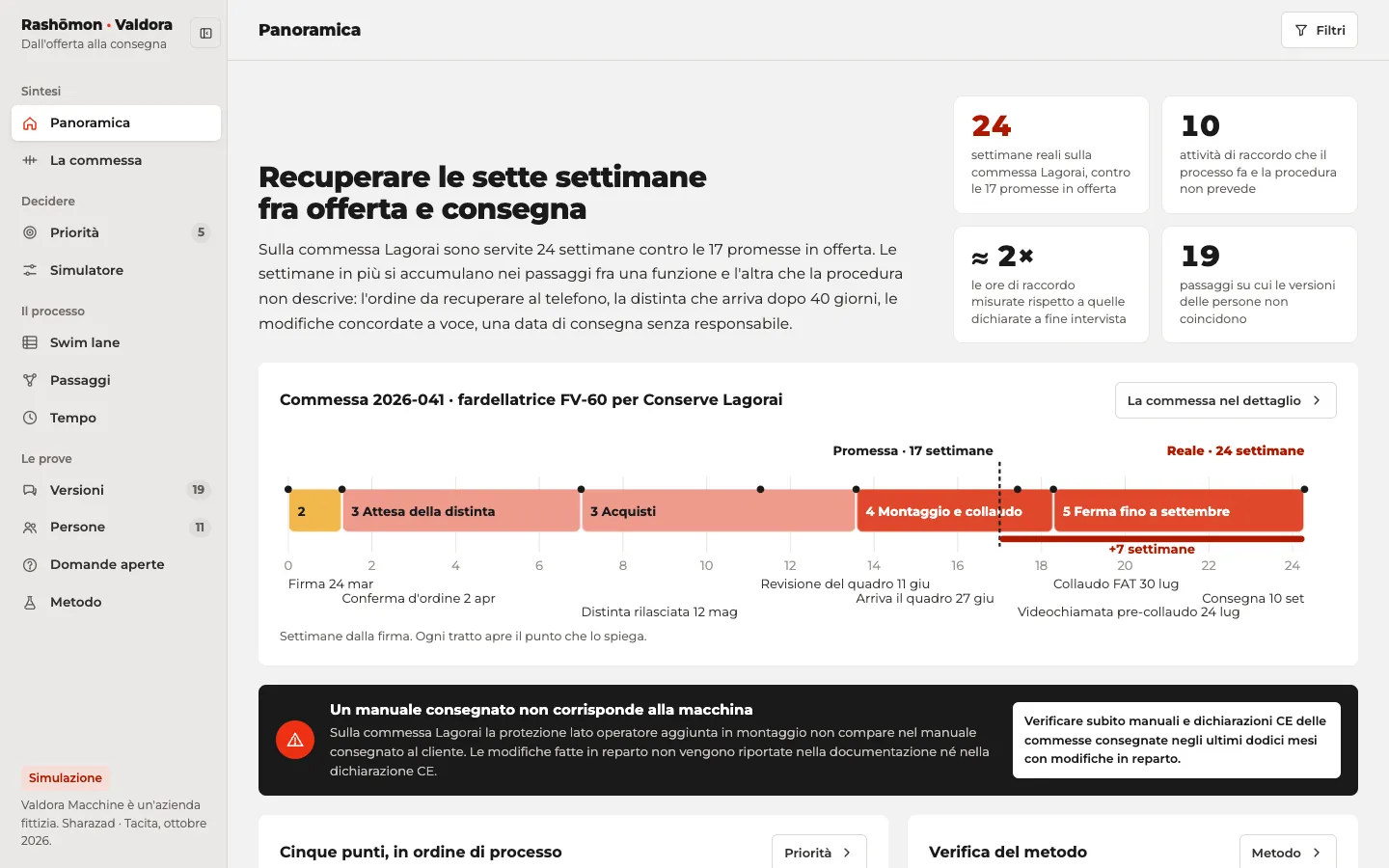
One process told by whoever starts it, whoever passes it on and whoever closes it. The interviewer carries what it learned from one interview to the next. In the end you see where the accounts do not match.
- Each interview picks up what the earlier ones left open.
- Versions that do not match become points to check.
- The real time of each step sits next to the promised one.
Full simulation. We show it live.
The org chart
that isn’t on paper.
On paper everything goes through the managers. In the interviews the people everyone really asks come to light. One map with six lenses. Official, real, skills, perception, risk and talent.
- Informal lines appear next to the written reporting lines.
- Every role gets a job description written from what people really do.
- A timeline shows which skills may leave with the people who retire.
Simulated company, fictional data.
Explore the map (opens in a new tab)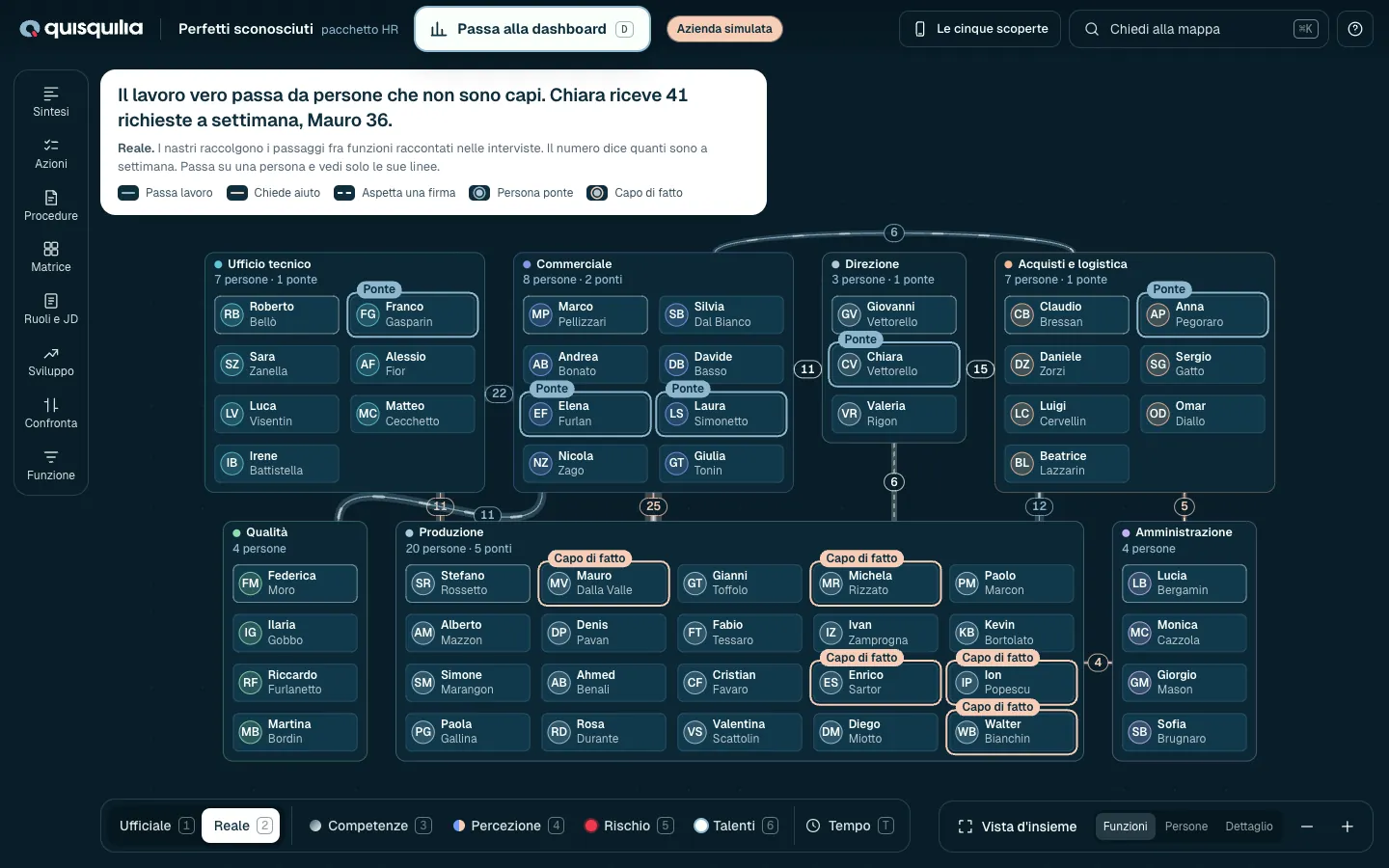
A room
that looks like you.
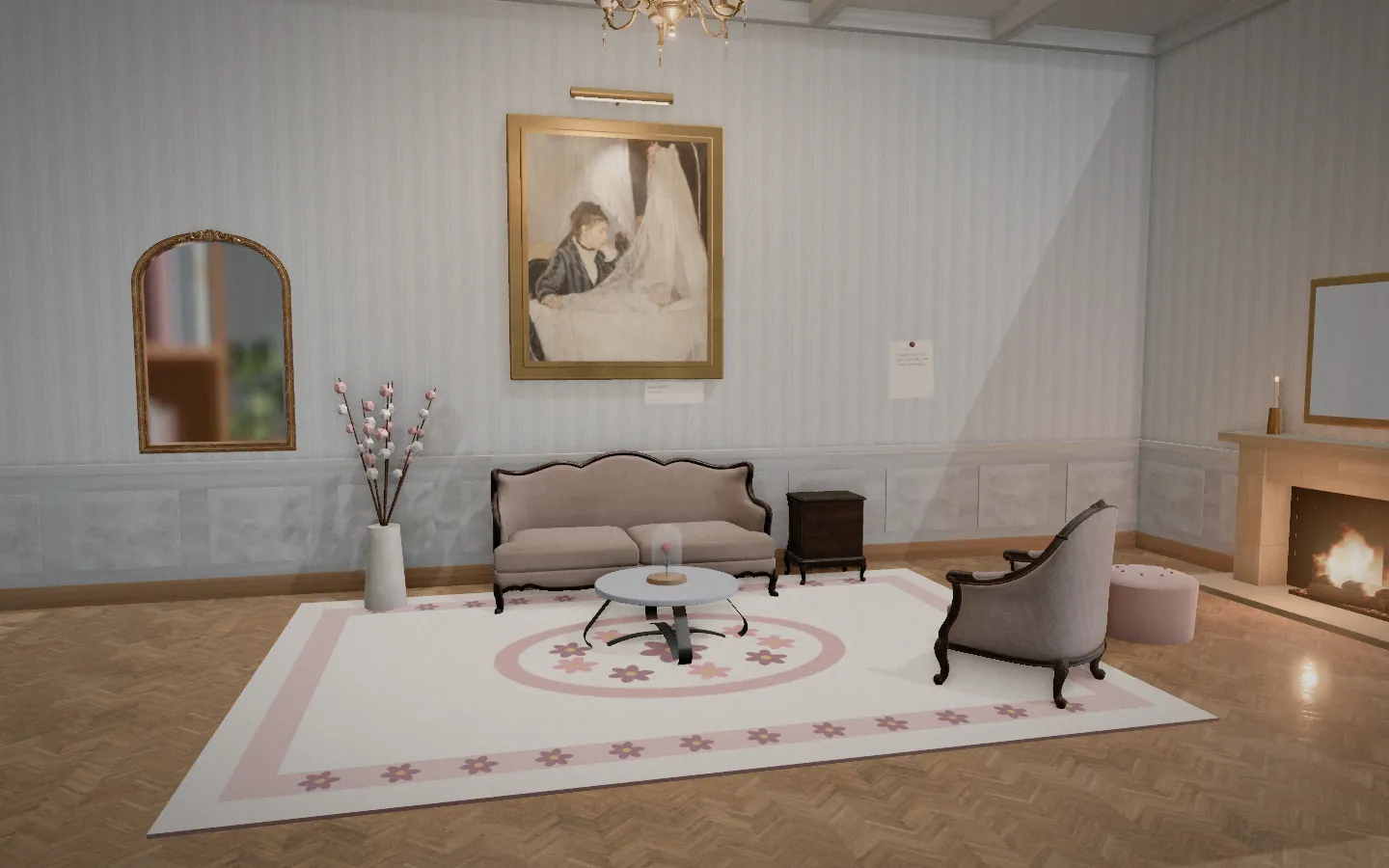
At the end of the interview the person opens a door and walks into a 3D drawing room. Floor, books, light and objects come from their answers. Eight different architectures, each with its own camera work.
- The camera enters like in a film, then the room is free to explore.
- Three traits read in the interview choose style, layout and furniture.
- Every object opens a card explaining why it is there.
Made for a magazine. We show it live.
A voice
in the crowd.
A kiosk in a public space. People stop, talk and are listened to. Touch is only needed to start. The rest is a free conversation.
- Every reason collected lands on a shared wall, anonymously, while the event is running.
- The ending changes with what you said. You take it with you.
- We are giving the interviewer a face. The face only receives the synthetic voice, never people’s answers.
Prototype for a public event.
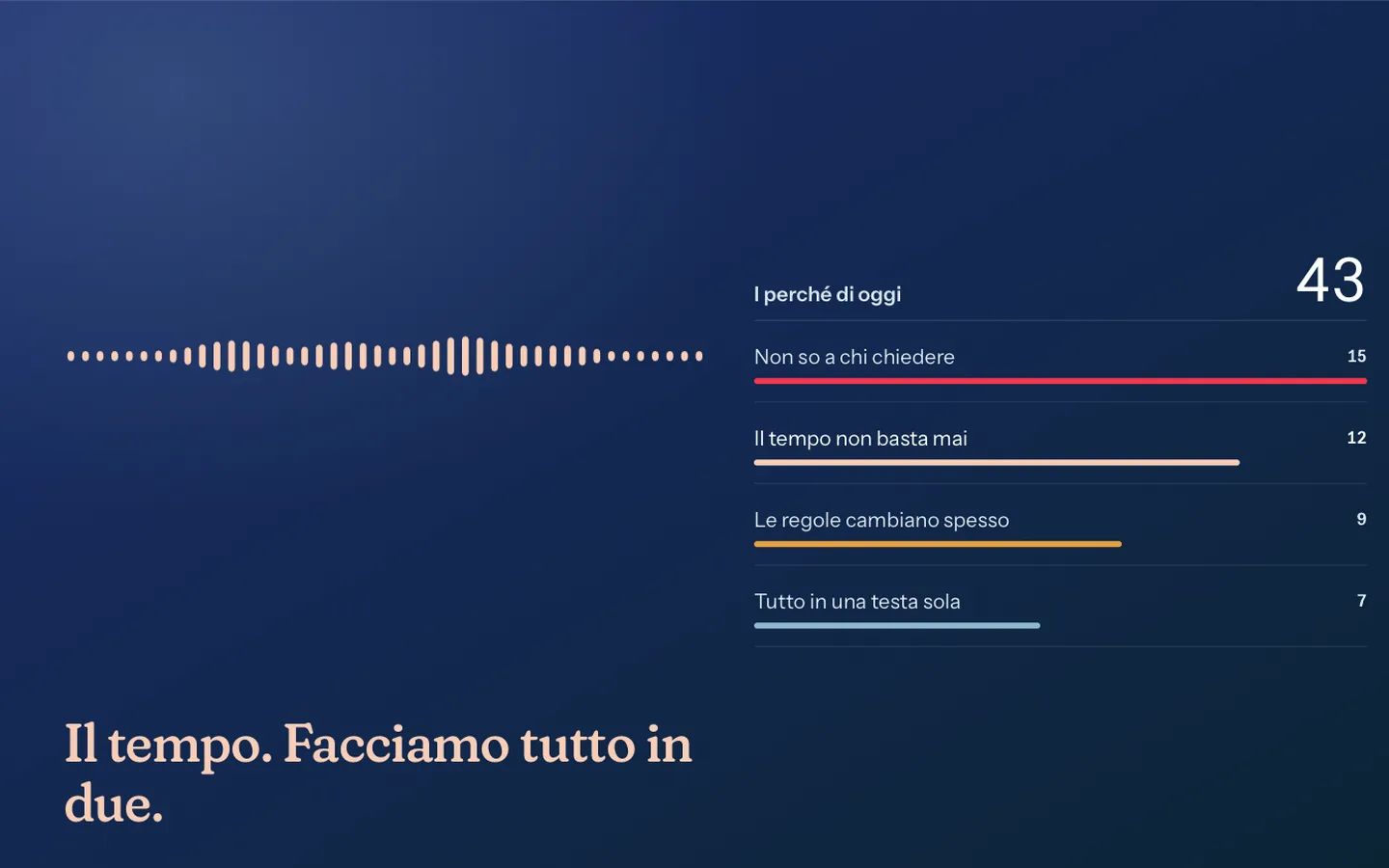
What made you stop here?
Today’s reasons 41
- I don’t know who to ask14
- There is never enough time11
- The rules keep changing9
- All in one person’s head7
The newsletter
that talks back.
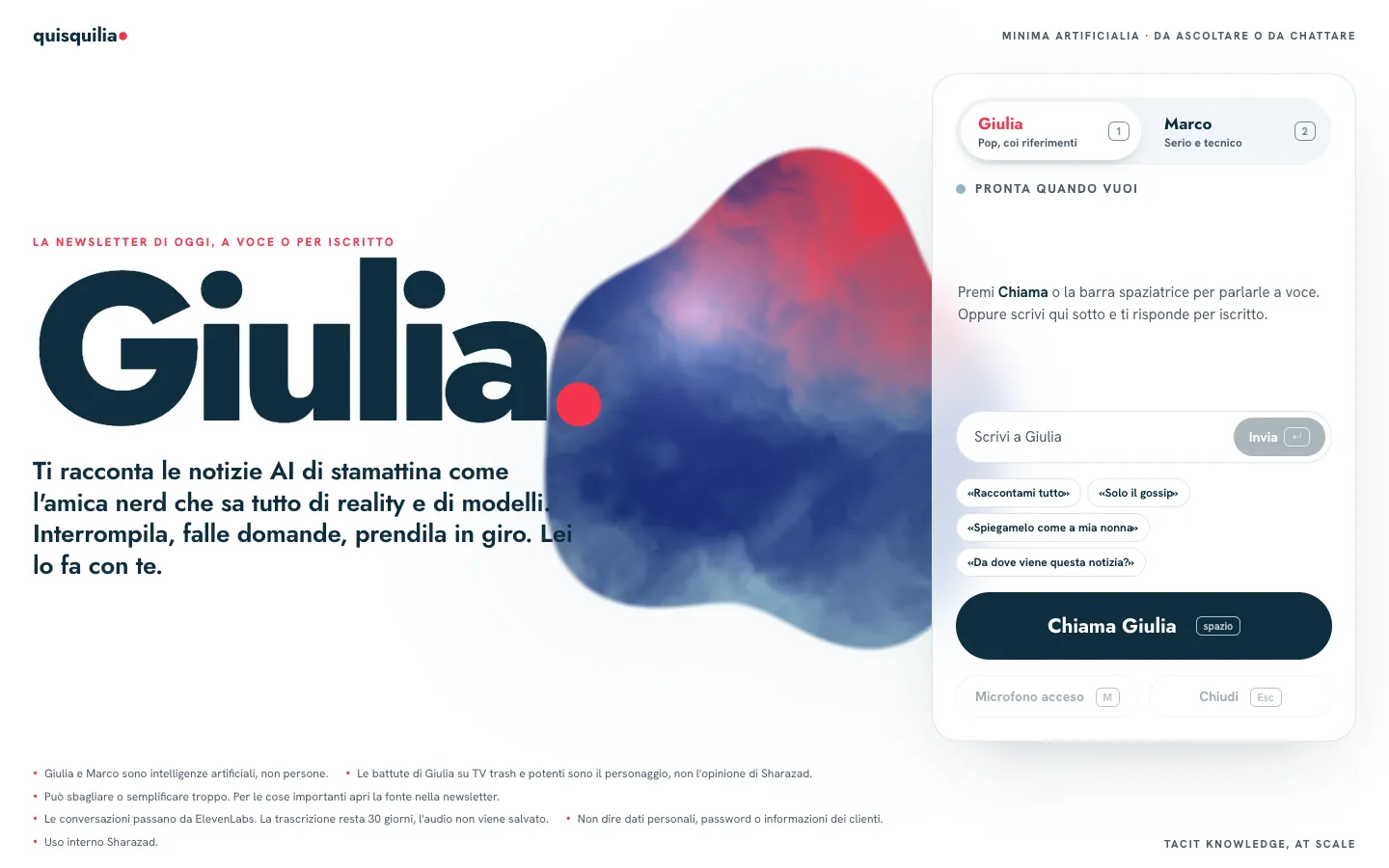
Every morning a team of agents reads the sources, picks the news on artificial intelligence and writes Minima Artificialia. Then it hands it to two voices. Giulia tells it pop, Marco explains it like an engineer. You call them and ask whatever you like.
- The sources read themselves, memes of the day included.
- Giulia and Marco know every past issue. They answer by voice or in writing.
- For a few weeks there was a podcast too, written by three agents debating each other.
Online every morning, in Italian.
Choose first.
Then find out.
Thirteen real moments when an entrepreneur had to decide. You step into their shoes, choose and find out what really happened. If a story intrigues you, call Michele and he tells you more.
- Three plausible options and six seconds to trust your gut.
- Other players’ choices grow with every game.
Open to everyone, no sign-up, in Italian.
Play What if Peter (opens in a new tab)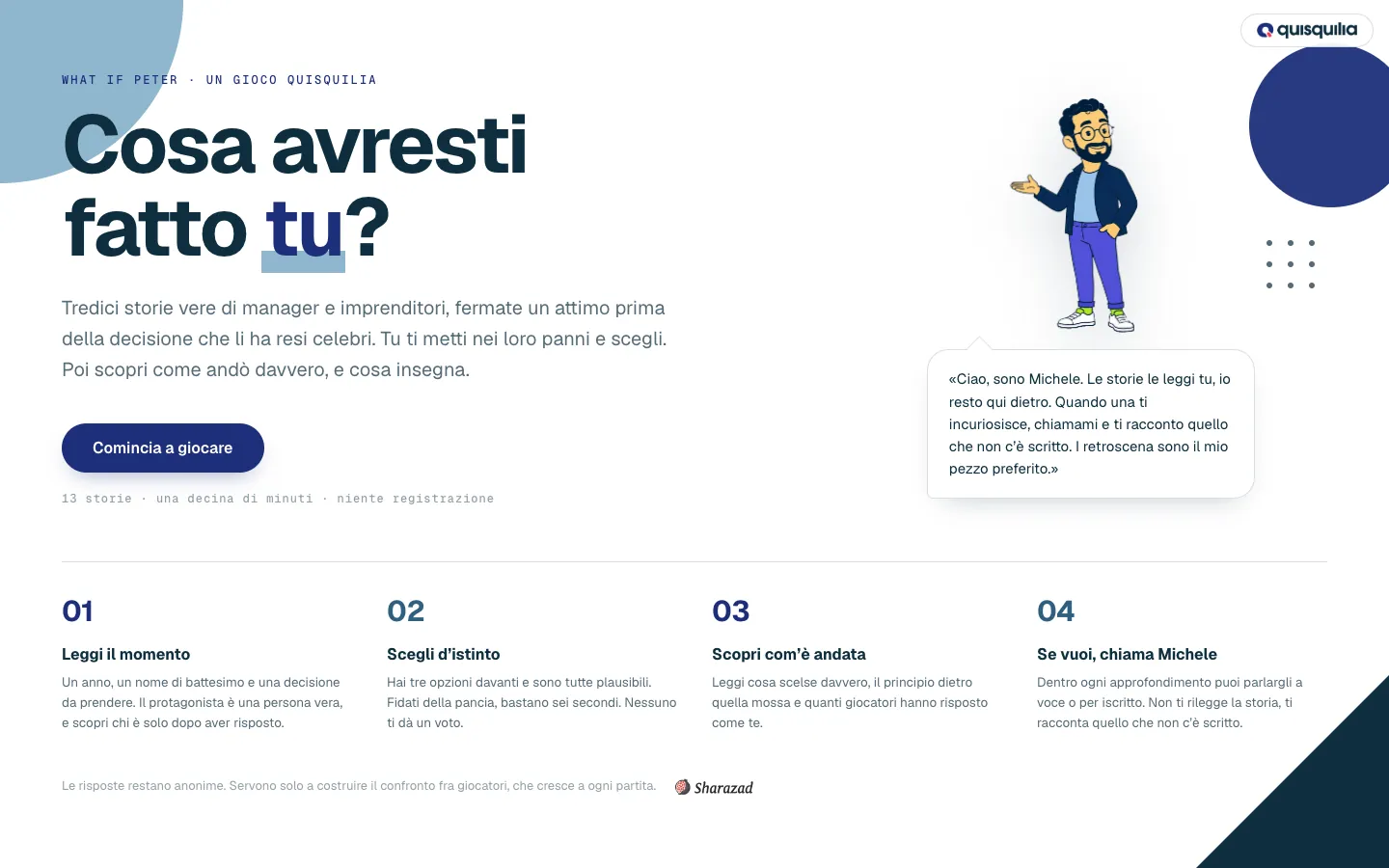
The next one
starts from your question.
A field where it is not obvious a conversation would work? That is exactly what we like to try.
Tell us your idea